Common Claim Denial Reasons and How to Avoid Denials: Complete 2026 Guide (California)

If your practice is dealing with claim denials, you’re not just losing time, you’re losing momentum. A denial turns “done” work into unpaid work, and then your team gets stuck in a loop: re-check the chart, fix the claim, call the payer, resubmit, wait… repeat. At Claim N Billing, we see the same patterns over and over: the denial itself is only the symptom. The real issue is usually upstream: eligibility, authorizations, enrollment/credentialing, documentation, or small claim-build errors that add up fast.

What are some common claim denial reasons?

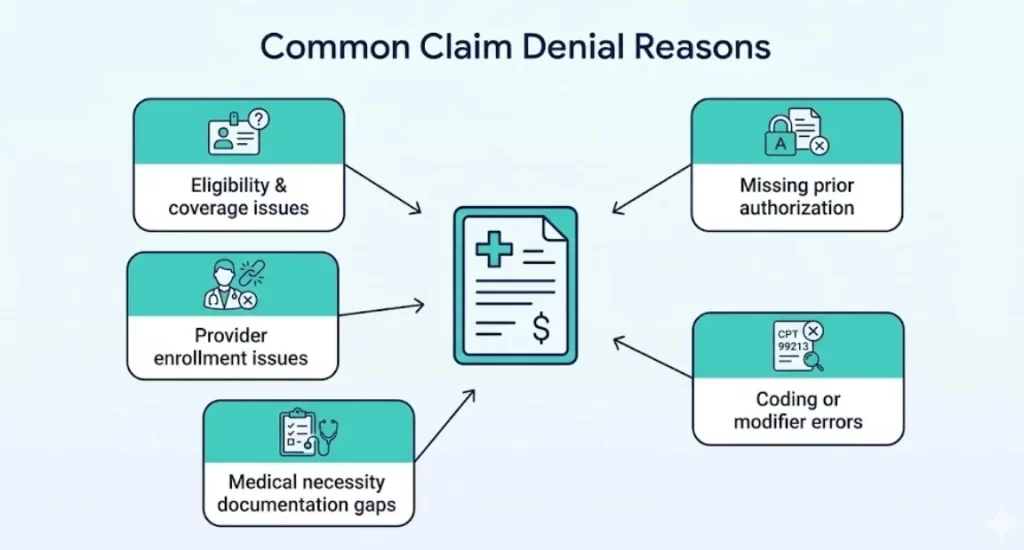
common claim denial reasons The most common claim denial reasons are eligibility/coverage issues, missing or inaccurate patient/provider data, missing prior authorization, coding/modifier errors, and medical necessity/documentation gaps. To avoid denials, build a simple front-end checklist (verify coverage + benefits, confirm authorization rules, confirm provider enrollment/credentialing, and validate coding/modifiers), then use denial trends from your remits to fix the root cause and not just resubmit.
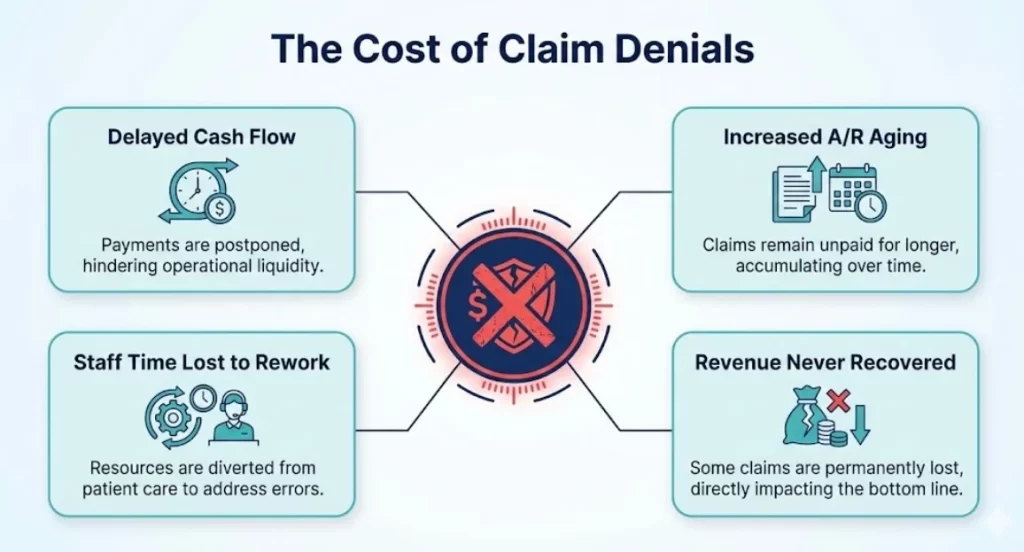
Table of Contents

Why claim denials hurt more than most owners think

Denials don’t just delay money, they quietly raise your cost per visit:

  • Staff time for research, corrections, phone calls, resubmissions
  • Provider time pulled into documentation add-ons
  • Patient frustration when statements go out incorrectly
  • Real cash-flow issues when denials stack up during busy months

And the worst part: many denials are preventable when the process is consistent and ownership is clear.

The most common claim denial reasons (and how to prevent them)

Table: Denial reason → What it usually means → How to avoid it

Common Denial Category

What it usually means

Denial Prevention that actually works

Eligibility/coverage

Patient not eligible on DOS, plan mismatch, COB not updated

Verify eligibility same day or day before date of service; Confirm PCP/referral rules; confirm COB/secondary details before claim submission

Missing/incorrect patient or claim data

Demographics, subscriber ID, NPI, taxonomy, address, DOB, claim, format errors

Standardize intake + claim-build validation; use a “clean-claim” checklist

No prior authorization (PA) / TAR

Service requires PA/TAR, but none on file—or doesn’t match

Confirm PA requirement before care; ensure the authorization matches code/DOS/provider/location; attach required clinicals for review programs

Coding / modifier errors

Code pair edits, wrong modifier, mismatch between dx and procedure

Train on common edits; run edit checks; confirm modifier appropriateness; fix patterns by payer/provider, not “one-off”

Medical necessity / documentation gaps

Notes don’t support the service billed (or payer expects extra docs)

Use payer-specific documentation expectations; make documentation habits consistent; submit supporting records when required 

Non-benefit / coverage limitations

Code is not covered for that plan/setting, or benefit limits exceeded

Verify benefits before care; if appropriate, use plan dispute/appeal pathways with medical necessity documentation

Provider enrollment / credentialing issues

Rendering/billing provider not enrolled, wrong taxonomy, not active for DOS

Keep credentialing/enrollment current; confirm payer effective dates; monitor re-credentialing and provider file accuracy

California-specific denial traps (Medi-Cal and managed Medi-Cal)

California practices get hit with denials that look “random” until you know what to watch for:

1) Medi-Cal eligibility file denials

Medi-Cal denials commonly trace back to eligibility on date of service and member file mismatches, meaning your front desk verification step matters more than people realize. 

2) Authorization/TAR (Treatment Authorization Requests) mismatches

Even when a TAR/authorization exists, denials happen when the procedure code billed doesn’t match the TAR, or required attachments aren’t submitted correctly.

3) “Provider not enrolled / not on file” type issues

These often come from enrollment/credentialing gaps, taxonomy mismatches, or rendering provider file problems, especially when onboarding new associates or covering providers.

Timelines you should manage (so denials don’t turn into write-offs)

Denials become expensive when deadlines get missed. Here are the timelines owners should keep visible: Claim submission: “timely filing” can be a hard stop Many payers have strict timely filing rules, and some timely-filing denials may not even be appealable depending on payer/claim type.

What denials cost (in real practice terms)

cost of claim denials Denials create two kinds of costs:
  1. Direct revenue impact: delayed or lost reimbursement
  2. Operational cost: staff time + rework + payer follow-up
Even when you “eventually” get paid, the overhead of rework eats margin, especially for small to mid-sized practices where one or two people carry the billing load.

Requirements to reduce claim denials (your clean-claim foundation)

You don’t need a complicated system. You need a consistent one.

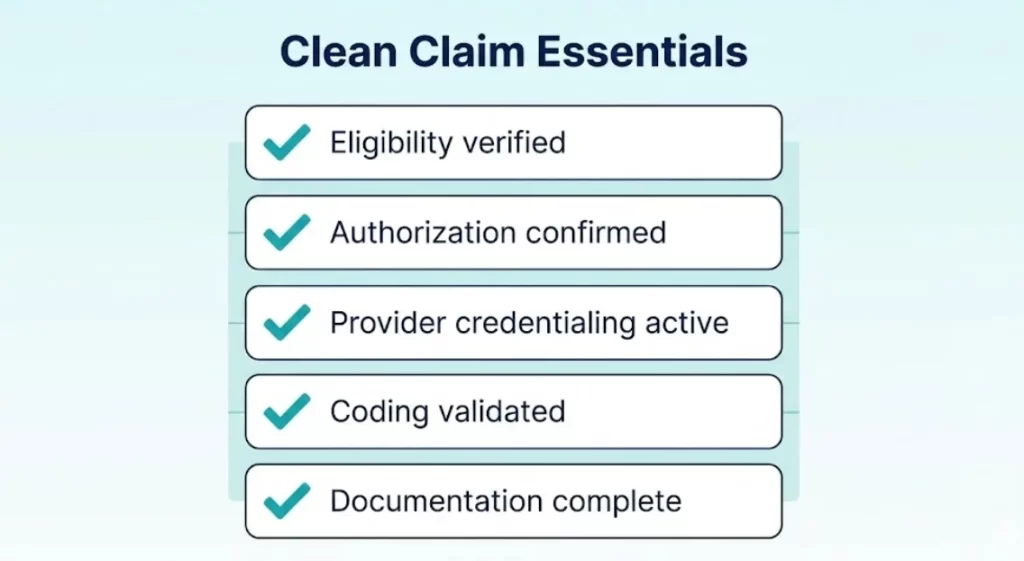
Clean-claim essentials (the non-negotiables)

Clean-claim essentials
  • Eligibility + benefits verification before DOS (or same day)
  • Authorization confirmation for services that require it (PA/TAR)
  • Provider enrollment/credentialing active and correct for payer + DOS
  • Coding + modifier validation (especially edit-driven denials)
  • Documentation supports medical necessity (and includes required attachments when needed)

The biggest challenges we see in small and mid-sized practices

“We don’t have time to do it twice… but we end up doing it twice.”
The practice is busy, and the person submitting claims is also answering phones, handling referrals, working statements, and chasing prior authorizations
“We only find patterns after it’s painful.”
Denials are often handled claim-by-claim, instead of fixing the intake step or authorization workflow that’s creating them.
“Credentialing is treated like a one-time task.”
Credentialing is ongoing. When provider files aren’t correct or aren’t active for the payer, denials happen even when the visit was perfect.

Denial prevention checklist (simple enough to actually use)

Before the visit (front-end):
  • Confirm active coverage + correct payer on DOS
  • Confirm whether PA/TAR is required for the planned service 
  • Confirm rendering provider is credentialed/enrolled and mapped correctly
Before claim submission (back-end):
  • Validate diagnosis/procedure match and required modifiers
  • Attach/support documentation when payer policy expects it
  • Submit within timely filing windows
After remittance (denial management):
  • Work denials weekly (minimum)
  • Track denial reasons by payer + provider + location
  • Fix the workflow step that caused it

FAQs about claim denials

What are the most common claim denials?

Eligibility/coverage problems, missing or inaccurate claim data, missing prior authorization, coding/modifier errors, and medical necessity/documentation gaps.

Are Medi-Cal denials different?

The categories are similar, but Medi-Cal often has more frequent issues around eligibility files, TAR/authorization alignment, and specific submission/attachment requirements.

How long do we have to appeal a denial?

It depends on the payer and denial type. For Medicare first-level appeals, it’s typically 120 days from receipt of the initial determination.

What’s the fastest way to reduce denials?

Stop treating denials like “billing’s problem” and treat them like a process signal. Fix the front-end (eligibility + auth + enrollment) and your denial rate drops first and then you tighten coding/documentation.

How Claim N Billing helps you prevent denials

We’re not here to drown you in jargon. We’re here to make billing feel steady again, so you’re not wondering what’s going to get denied this week.

What we do for California practices
  • Denial prevention setup: clean-claim workflow + checklists (front desk to back-end)
  • Denial management: track patterns, correct root causes, and manage follow-ups
  • Credentialing/enrollment support: because “provider not active/on file” denials are avoidable when credentialing is maintained 
Credentialing services

If you’re onboarding providers, expanding into new payer networks, or dealing with denials tied to enrollment/taxonomy/provider file issues, credentialing support is usually the quickest “unlock.”

  • Learn more about Provider Credentialing with Claim N Billing
  • Ready to talk? Contact our team (phone and consultation request available)

Want us to review your top denial reasons?

If you send us:

  • your top denial codes/reasons from remits (even a screenshot is fine),
  • your top 3 payers,
  • and your specialties,

We’ll tell you what’s causing the repeated denials and what to fix first without turning it into a six-month “project.”