
What should my practice do to prepare for a payer audit?
Start by ensuring your documentation matches every claim you have submitted, confirming that medical necessity is clearly supported in the clinical record, and that your coding aligns with payer guidelines. A proactive approach ongoing documentation review, staff training, and a defined audit response process reduces your risk and accelerates resolution when a payer does reach out. Claim N Billing works with practices to build these systems before an audit lands, not after.
What a Payer Audit Actually Is (and Why It Happens)
A payer audit is a formal review by an insurance company, government payer, or contracted plan to verify that claims your practice submitted were billed correctly, coded accurately, and supported by appropriate clinical documentation. Audits are not always triggered by wrongdoing they can be routine, statistically driven, or initiated because your practice’s billing patterns fall outside expected norms for your specialty or region.
Key takeaway: payers audit to protect against overpayments, upcoding, and unbundling. Even practices with clean intent can receive audit requests when documentation is thin, coding is inconsistent, or claim volume spikes in a category the payer is watching.
Where this shows up operationally
- You receive a letter from the payer requesting medical records for a list of claims.
- The payer places a prepayment review hold on new claims while reviewing past billing.
- Payments are recouped (clawed back) after a post-payment audit finds billing errors.
- You receive a Corrective Action Plan (CAP) requiring policy or process changes.
- You are flagged for a follow-up or expanded audit if the first review finds irregularities.
Types of Payer Audits Your Practice May Face
Not all audits are the same. Understanding what type of review you are dealing with shapes how you prepare and respond. The table below outlines the most common types and what each means for your practice.
Audit Type | What It Involves | Risk Level |
Post-payment audit | Payer reviews previously paid claims and may recoup overpayments found | High — affects cash already received |
Prepayment review | Claims held pending documentation review before payment is released | Medium — delays cash flow |
Probe / statistical audit | Payer samples a subset of claims to estimate error rate across a broader set | High — can extrapolate findings |
Routine desk audit | Payer requests records for specific claim types on a scheduled cycle | Low to medium — manageable with records |
Pre-Audit vs. Reactive: Why Preparation Beats Reaction
Many practices only think about audit readiness after a letter arrives. At that point, your team is scrambling to pull records, reconstruct documentation, and respond under a deadline—often while still managing day-to-day operations. Practices that build audit readiness into their standard workflow are far better positioned.
“Pre-audit” and “reactive response” are two very different modes of operation. Think of it as: (1) building a documentation culture that supports every claim before it is submitted, (2) conducting internal audits on a rolling basis so problems are caught early, and (3) having a defined process ready so your team knows exactly what to do when a payer letter arrives.
Common requirements that audit-ready practices have in place
- Signed and dated progress notes that match billed visit types and service dates.
- Medical necessity documentation that clearly supports each code billed.
- A coding policy aligned to current payer guidelines and CPT/ICD-10 updates.
- Staff training records showing ongoing coder and provider education.
- An internal audit log tracking findings, corrections, and follow-up dates.
- A designated point person or billing partner who manages payer correspondence.
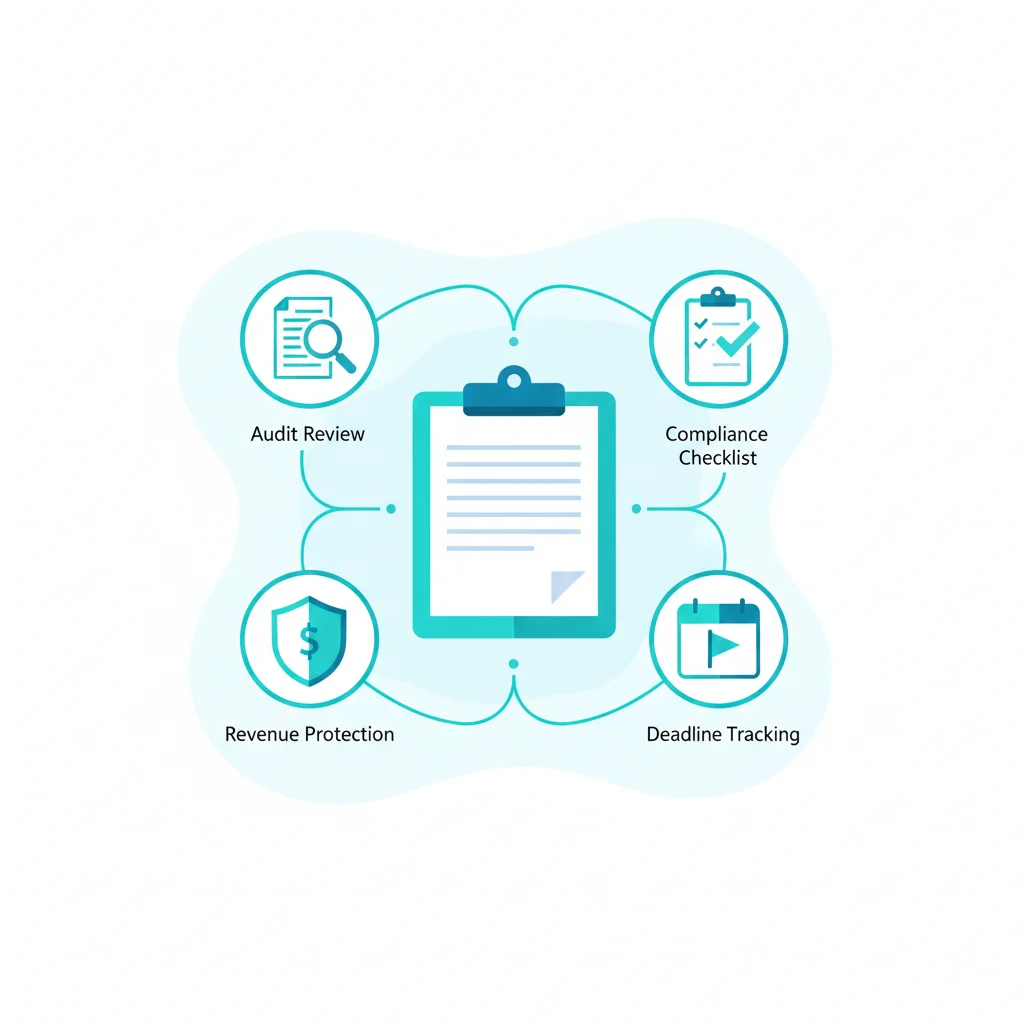
What a Clean Audit-Ready Practice Looks Like
Audit readiness is not a one-time project. It is an ongoing set of habits embedded in your revenue cycle. Here is what Claim N Billing helps practices build and maintain:
- Eligibility and benefit verification at intake (so coverage is confirmed before services are rendered).
- Charge capture review: visit types, units, modifiers, and service dates are verified before claims go out.
- Pre-submission claim scrubbing against payer-specific edits to reduce first-pass rejections.
- Denial tracking by category so patterns are visible and actionable.
- Periodic internal audits: sample claims reviewed against documentation before a payer asks.
- Payer correspondence tracking: every audit letter logged, deadlines tracked, and responses submitted on time.
- Staff training checkpoints tied to new payer policy updates or coding changes.
- Monthly reporting with red-flag indicators: denial spikes, coding shifts, and documentation gaps.
Top Audit Findings We See (and How to Prevent Them)
Most audit findings are preventable when documentation and coding workflows are tight from the start. Here are the most common issues and the steps that eliminate them.
Audit Finding | Why It Happens | Prevention Step |
Medical necessity not documented | Provider note does not clearly support the diagnosis or service level billed | Use structured note templates that prompt for necessity; review sample notes monthly |
Upcoding / incorrect E/M level | Visit complexity billed does not match documentation in the chart | Conduct E/M level audits quarterly; educate providers on MDM vs. time-based coding |
Unbundling | Services billed separately that should be included in a bundled code | Use a CCI edit check tool and review bundling rules for high-volume code pairs |
Missing or late documentation | Notes not signed, addenda applied late, or records not locatable | Implement a 24-48 hr note completion policy; audit open encounters weekly |
Incorrect modifier use | Modifiers added without meeting the criteria the payer requires | Maintain a modifier policy document; validate modifier use before submission |
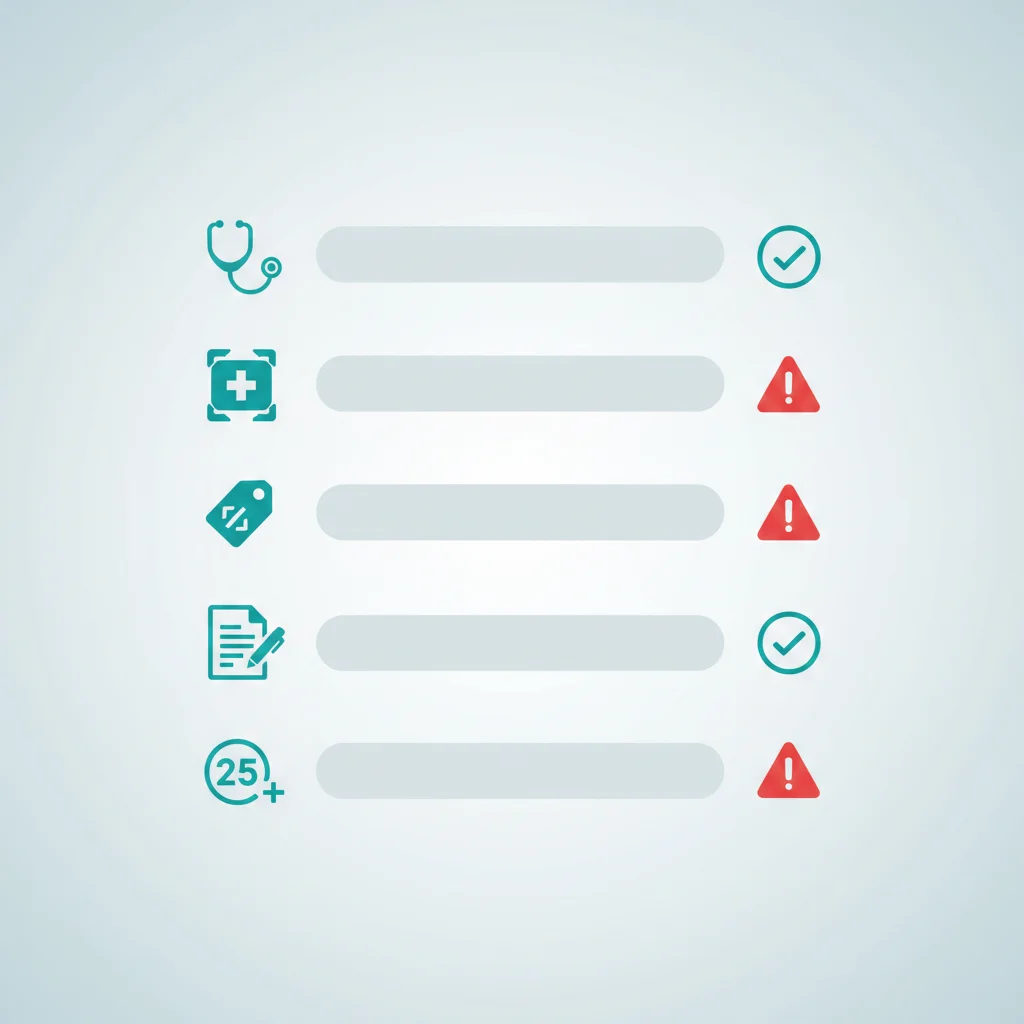
Step-by-Step Audit Preparation Workflow
- Receive and log the audit letter: assign an owner, note the response deadline, and identify which claims and dates of service are under review.
- Pull and organize requested records: gather the complete medical record for each claim—progress notes, orders, referrals, and any supporting documentation.
- Internal pre-review: review each record against the claim before submitting to the payer. Flag discrepancies and assess whether the documentation supports what was billed.
- Identify and address gaps: if documentation is insufficient, determine whether a compliant addendum is appropriate (never alter records—only addend per your state and payer rules).
- Prepare a response packet: organize records in the order requested by the payer; include a cover letter listing each claim and its corresponding documentation.
- Submit on time: use the payer’s preferred submission method (mail, fax, or portal); keep a timestamped copy of everything submitted.
- Track the payer’s decision: log audit outcome, any recoupment amount, and whether you plan to appeal.
- Appeal if warranted: if the payer’s finding is incorrect, prepare a written appeal with supporting clinical documentation and applicable coding guidance.
- Internal corrective action: identify the root cause of any valid findings and update workflows, templates, or training to prevent recurrence.
- Monthly audit log review: incorporate audit findings into your reporting cycle so trends are visible and progress is tracked.

Documentation Checklist That Protects Reimbursement
Use this checklist as part of your standard operations—not just when an audit arrives. Consistent documentation habits reduce your audit risk significantly over time.
Before the service (intake and scheduling)
- Insurance eligibility verified and benefits confirmed for the date of service.
- Prior authorization obtained and reference number documented (when required).
- Referring provider information captured if required by payer.
- Patient consent forms signed and filed in the chart.
At the point of care (visit documentation)
- Provider note completed and signed within 24-48 hours of the visit.
- Chief complaint, history, examination findings, and assessment/plan clearly documented.
- Medical necessity explicitly stated and tied to the primary diagnosis.
- Time documented if billing based on time (with start/stop times or total time noted).
- Orders, referrals, and care coordination notes attached when applicable.
- Diagnosis codes match the clinical documentation (no vague or non-specific codes when specificity is available).
- Procedure codes align with what was documented and performed.
- Modifiers verified against payer-specific requirements.
- Units, dates of service, and place-of-service codes reviewed.
- Pre-submission claim scrub completed and rejections cleared.
Monthly Compliance Tracking: What to Monitor
Your billing data tells a story. Monitoring these metrics each month gives you early warning signs before a payer notices a pattern.
Metric | Why It Matters | Goal |
First-pass acceptance rate | Measures how many claims pass payer edits on the first submission | Target 95% or higher; investigate drops immediately |
Denial rate by category | Identifies systemic problems in coding, documentation, or eligibility | Reduce medical necessity and coding-related denials month over month |
E/M level distribution | Shows whether your coding pattern is shifting — a red flag for upcoding audits | Compare against specialty benchmarks quarterly |
Modifier usage frequency | Tracks how often specific modifiers are applied | Flag outliers vs. your own historical baseline |
Open encounters / unsigned notes | Measures documentation completion discipline | Zero open encounters older than 48 hours |
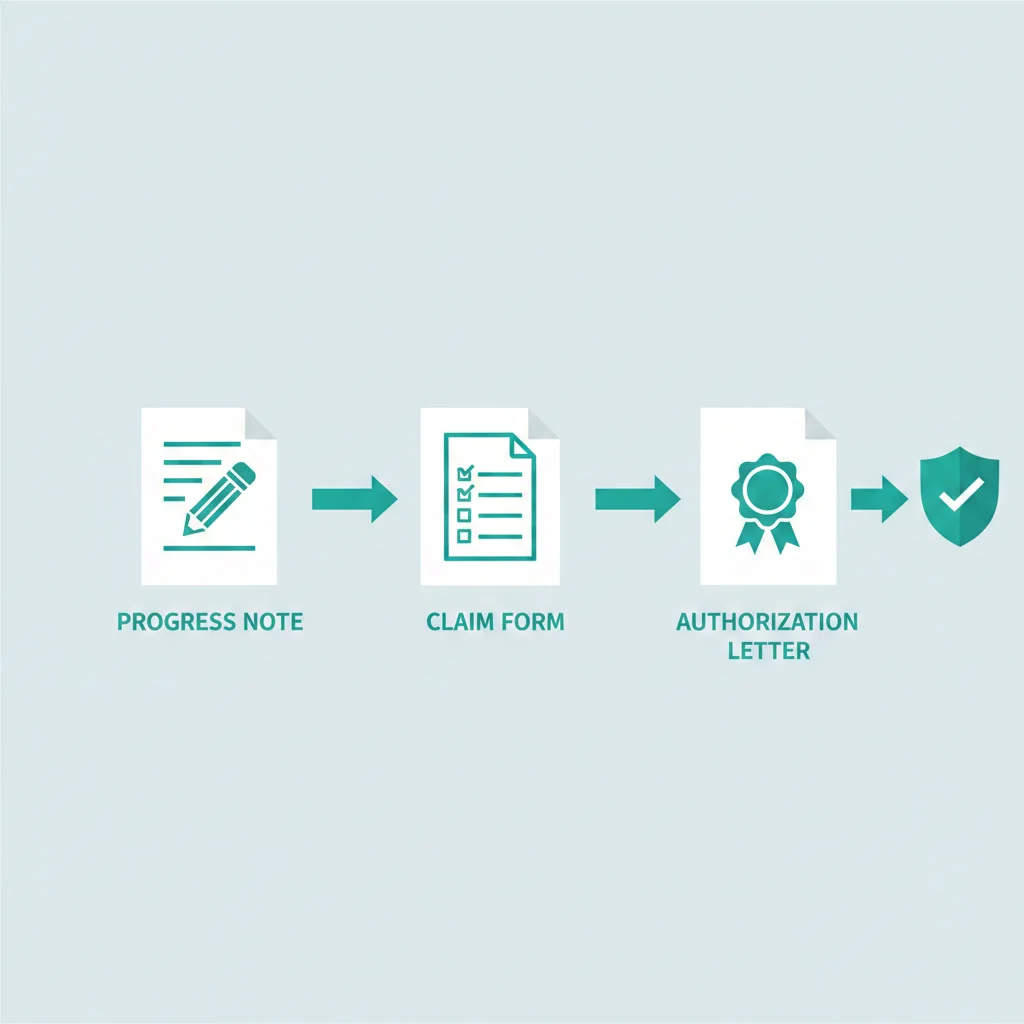
Don’t wait for an audit letter to find gaps in your documentation or billing workflow. Contact Claim N Billing to schedule a billing review, build your internal audit process, and make sure your practice is ready before a payer comes knocking. We help practices across specialties reduce audit risk, resolve findings, and protect the revenue they have already earned.
Explore our full range of services at claimnbilling.com and see how a cleaner revenue cycle starts with proactive compliance.
