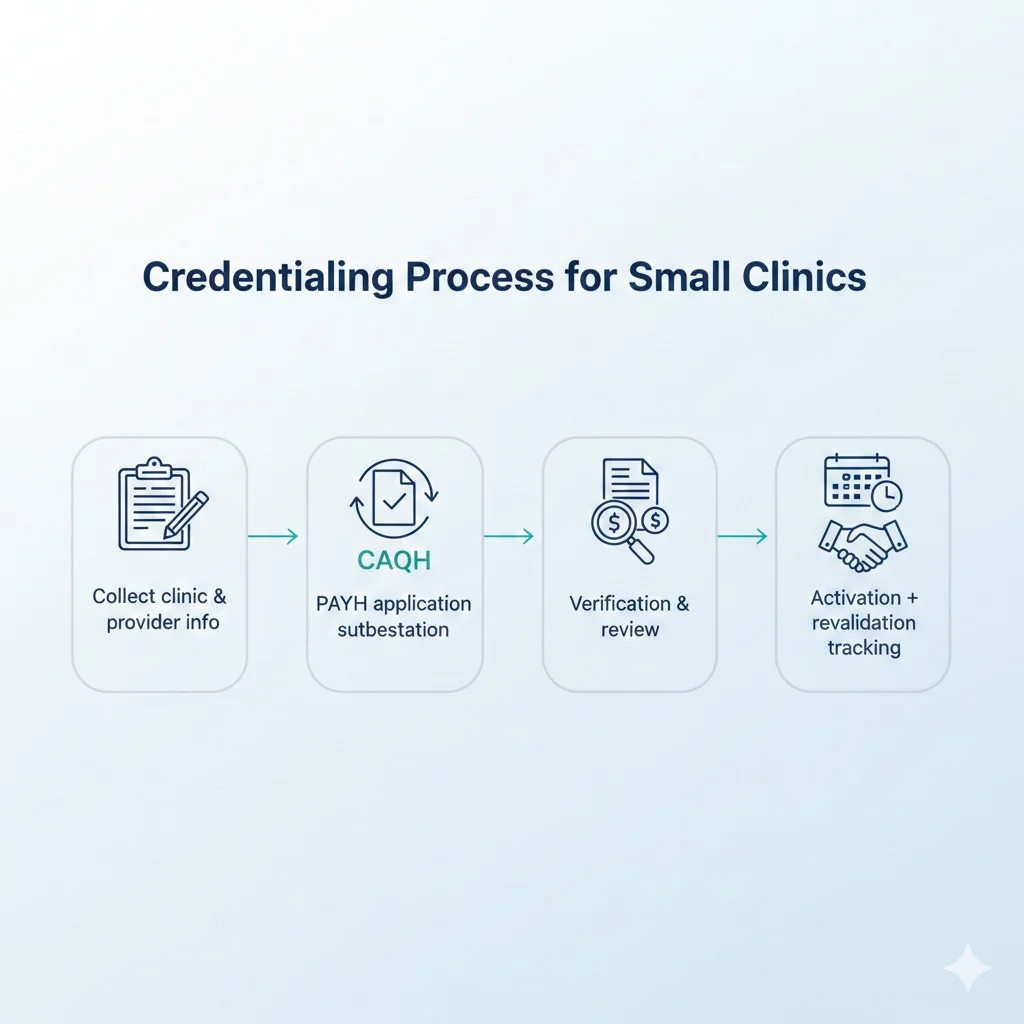
Insurance credentialing is the process of enrolling your clinic and providers with payers so you can bill and get paid. In California, most small clinics should plan for 60 to 90 days for Medi Cal enrollment via DHCS PAVE (often longer if anything is missing) and about 60 to 120 days for many commercial payer credentialing decisions once a complete application is in.
If you want credentialing to actually translate into revenue, treat it like a project: build a clean provider file, keep CAQH current, respond to requests fast, and do not start seeing patients “as in network” until you have written confirmation and effective dates.
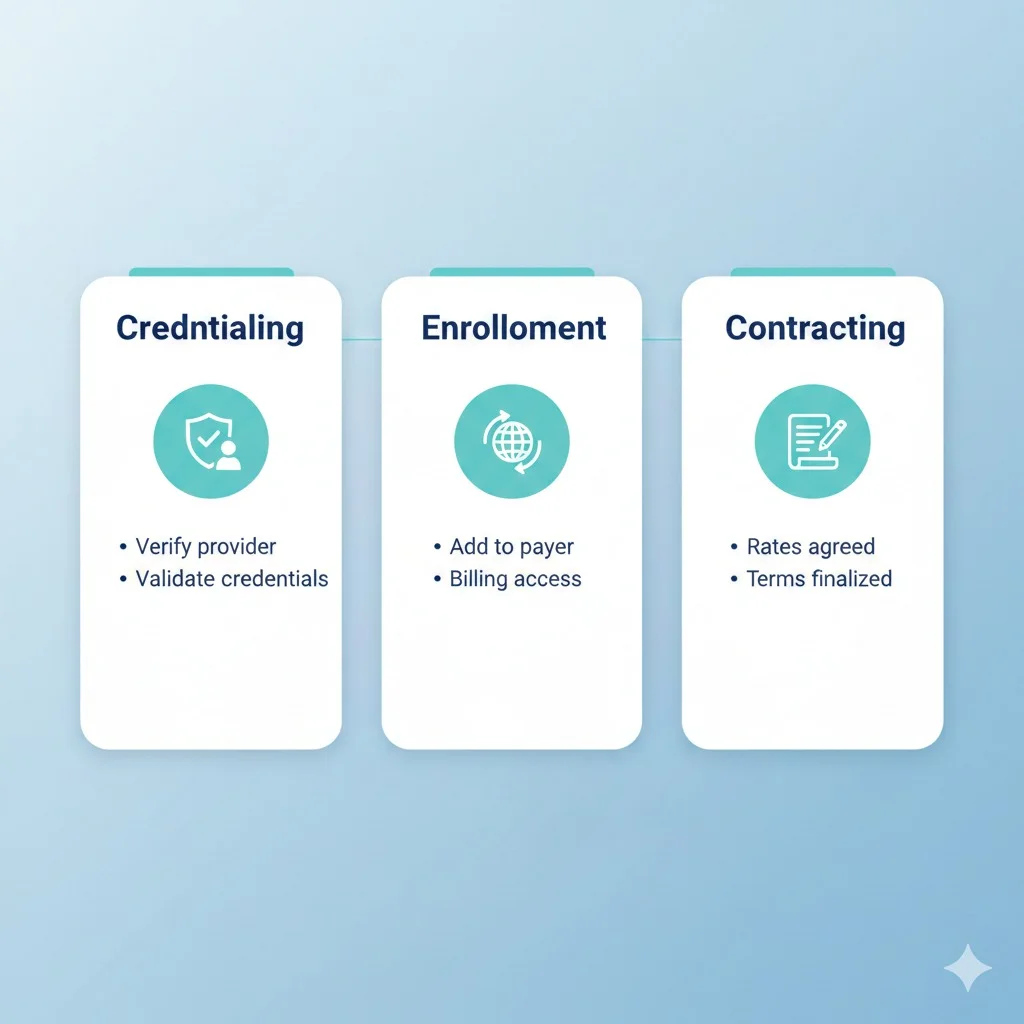
Small clinics often use one word for three different steps.
| Category | What you’ll typically need | Why it matters |
| Identity and licensing | Current California license, NPI, DEA if applicable | Payers verify you can legally render the service |
| Work history | CV with clean timeline and explanations for gaps | Credentialing reviewers often flag gaps |
| Insurance | Malpractice certificate of insurance | Frequently required for network participation |
| Practice info | Address, phone, hours, taxonomy, services | Must match across CAQH and payer forms |
| Tax and banking | W 9, EFT details, pay to address | Needed for payment setup |
| CAQH profile | Completed, authorized, attested, maintained | Many commercial plans pull data from CAQH |
| Payer type | Typical timeline | Notes that impact revenue |
| Medi Cal (CA DHCS) | Often 60 to 90 days for review, longer if discrepancies | Start early, especially for new clinics and ownership structures |
| Medicare (PECOS) | Can be shown as fast as 15 days in some contractor guidance for certain clean PECOS apps | Development requests, site visits, and risk screens can extend timelines |
| Commercial plans | Commonly 60 to 120 days after a complete submission | Many plans rely on CAQH plus payer specific forms |
| Cost area | What it includes | Typical reality for small clinics |
| Provider setup and compliance | CAQH profile work, document collection, license monitoring | Time intensive and easy to underestimate |
| Malpractice coverage | Policy premiums and COI issuance | Often required before approval |
| Enrollment operations | EFT, ERA, portal setup, claim testing | Needed to actually get paid after approval |
| Admin time | Staff hours, follow ups, resubmissions | The hidden cost that drags launches |
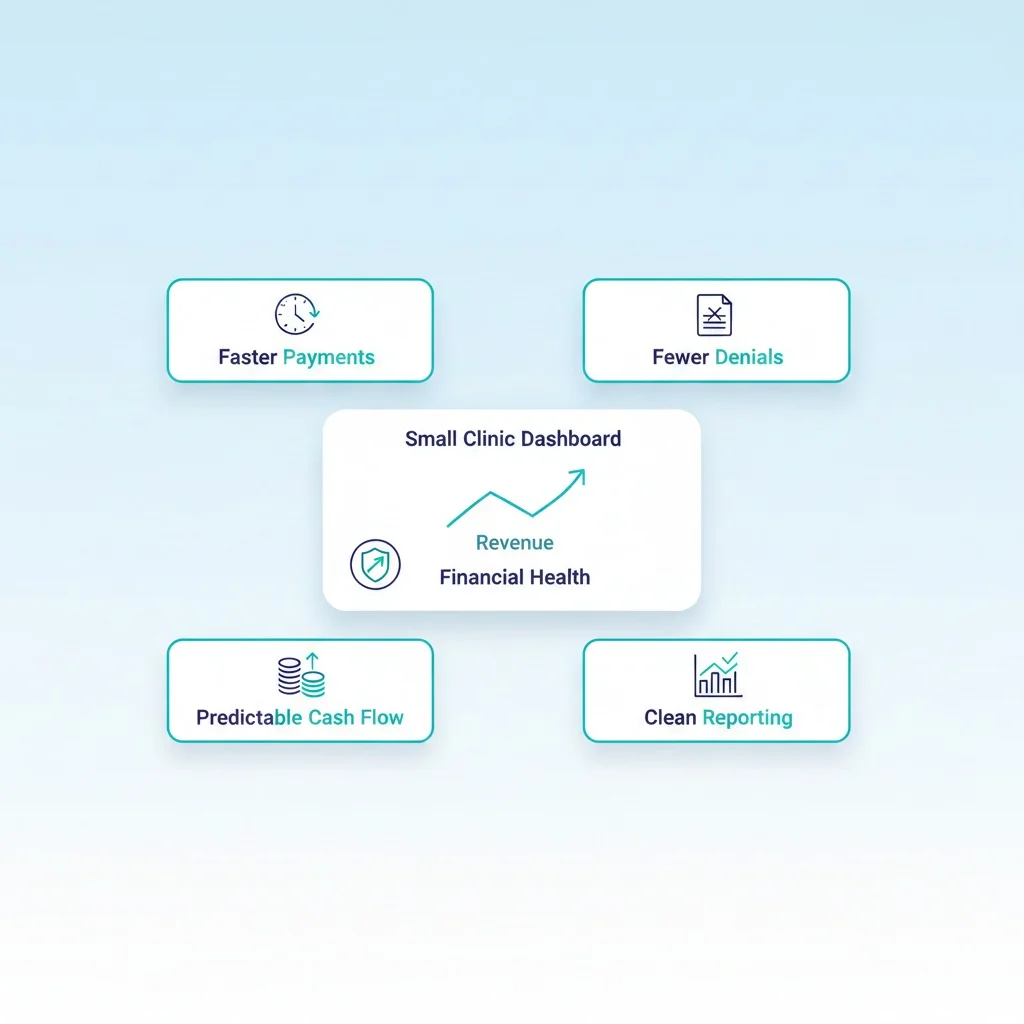
For California small clinics, Medi Cal is often the highest impact payer to get right because:
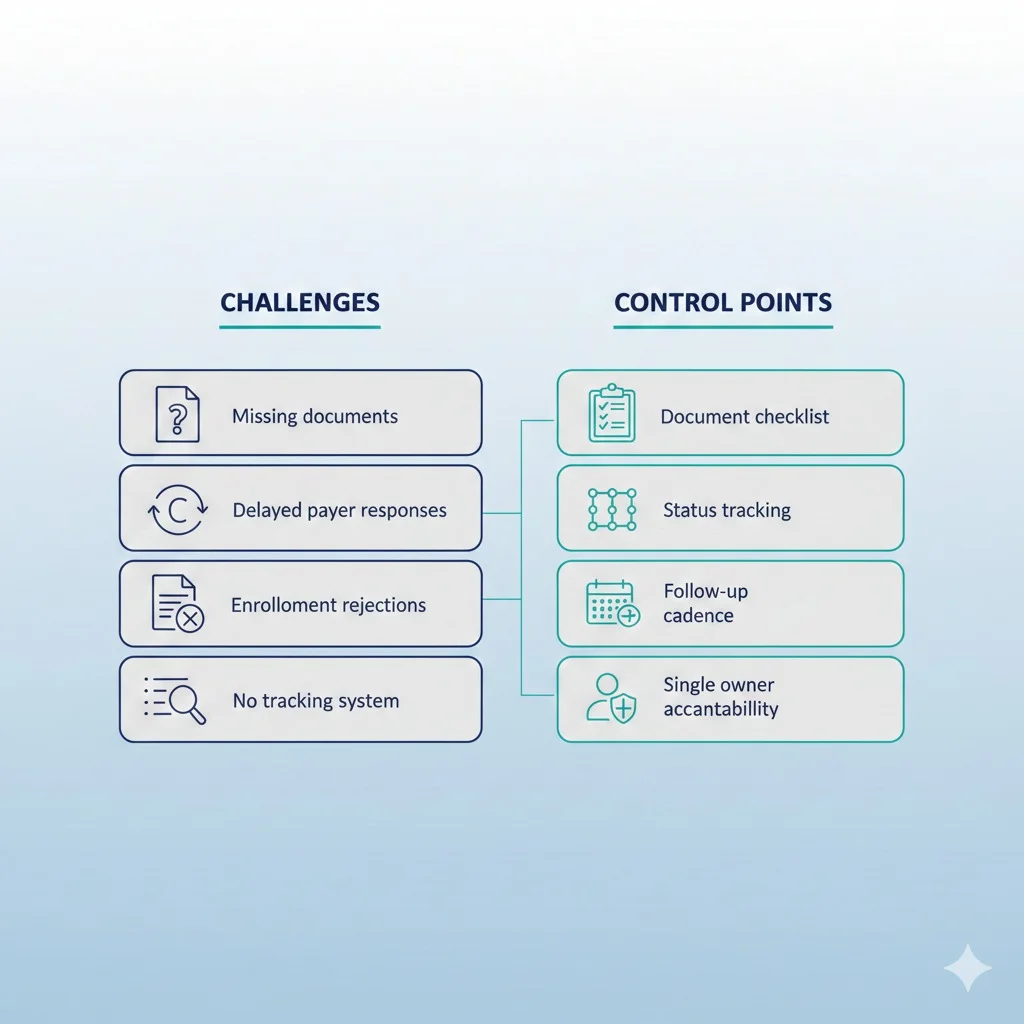
Plan for 60 to 90 days for Medi-Cal enrollment review indicate ranges and 60 to 120 days for many commercial plans after complete submission, with Medicare sometimes moving faster for clean PECOS files.
Submit a complete file the first time, keep CAQH accurate and attested, and respond to payer requests quickly. CAQH guidance explains uploading documents and maintaining your profile as part of the process.
Not all, but many commercial payers rely on CAQH as a primary data source for credentialing.
Medi Cal enrollment is handled through DHCS, and DHCS provides the PAVE portal as the web based method to submit enrollment applications and manage ongoing enrollment actions.
You can, but you must be careful about messaging and financial policy. Without approval and effective dates, reimbursement may be out of network, denied, or require patient self pay arrangements.
Common requirements include malpractice coverage, a current license, a CV with a clear work history, and payer application forms. Blue Shield related credentialing materials list these kinds of supporting documents as part of a credentialing submission.
You still need enrollment activation: EFT and ERA setup, portal access, claim submission configuration, and internal workflows so billing is clean from day one.
Insurance credentialing can be straightforward on paper and messy in real life. Small clinics usually come to us after they have lost weeks to back and forth emails, mismatched provider data, or payer requests they did not even realize were time sensitive.
With Claim N Billing, our credentialing support is built for small to mid sized practices that need this handled cleanly, with visibility:
If you are adding a provider, opening a second location, or finally getting serious about being in network, credentialing is the foundation. When it is done right, your billing becomes predictable. When it is done halfway, it becomes a denial factory.
If you want Claim N Billing to handle your credentialing, reach out through using below button and tell us your clinic type, your payers, and your target go live date. We will map the timeline, the required documents, and the fastest clean path to approval.