

What Is Claim Payment Turnover?
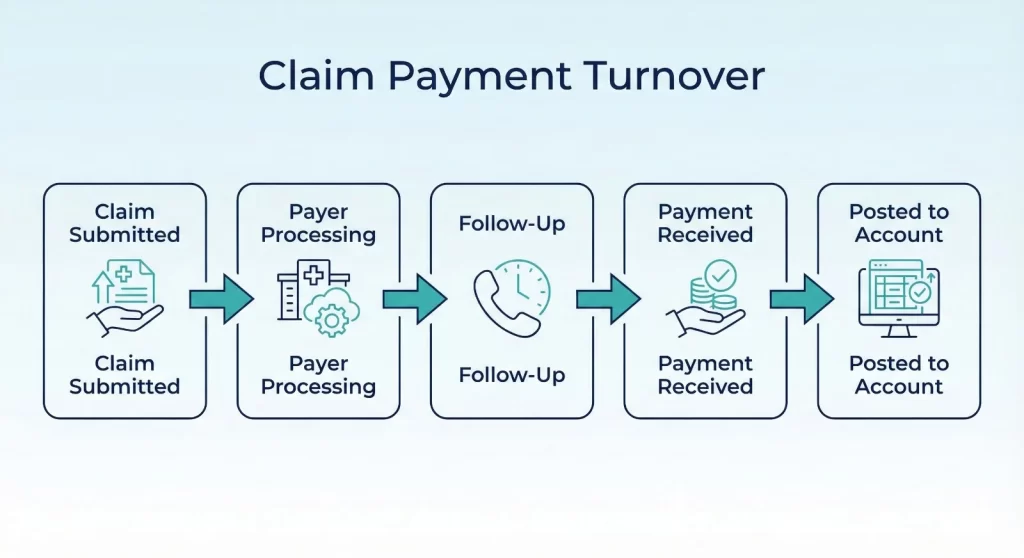 Claim payment turnover refers to the time between providing care and receiving payment from insurance companies. It includes:
- Claim creation and submission
- Payer processing and review
- Denials or requests for additional information
- Payment posting and reconciliation
- Payroll becomes stressful
- Rent and overhead eat into savings
- Owners delay hiring or expansion
- Providers start working more for less
Why Claim Payment Turnover Matters for Your Practice
Most small to mid-sized practices operate on thin margins. When payments lag, the financial pressure is immediate. Credentialed vs Poorly Managed Billing| Efficient Billing Process | Delayed Billing Process |
| Payments in 30-45 Days | Payments in 75-120 days |
| Predictable cash flow | Constant Financial uncertainty |
| Low Denial Rates | High rework and write-offs |
| Time spent on patients | Time spent on chasing payers |
| Claim Type | Average Payment Time |
| Clean Electronic Commercial Claim | 14-30 days |
| Medicare Clean Claim | 14-28 days |
| Medi-Cal Claims | 30-60 days |
| Claim with errors or missing data | 60-120+ days |
| Denied Claims requiring appeal | 90-180 days |
What Slows Claim Payments Down
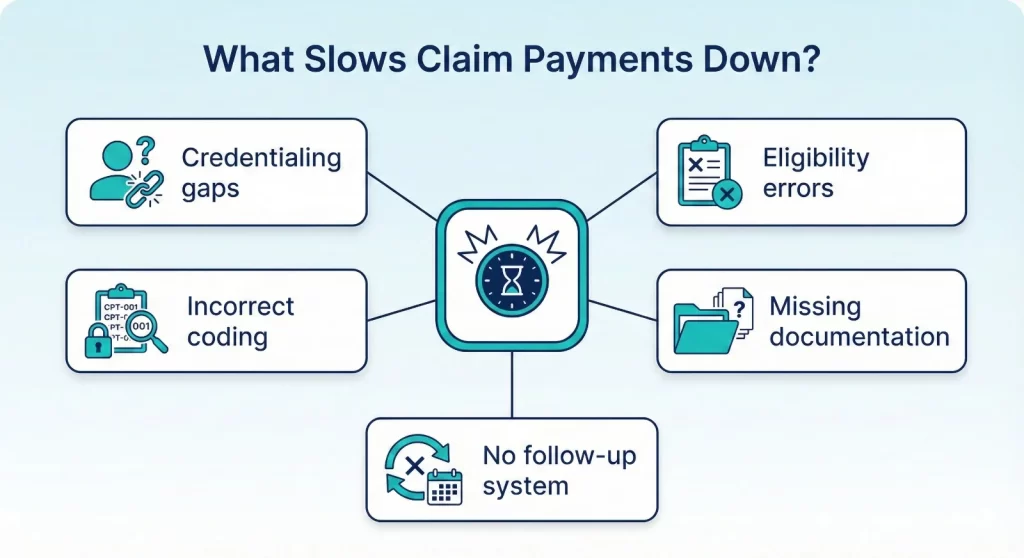 From what we see every day at Claim N Billing, delays usually come from a few repeat issues:
1. Credentialing Gaps
Providers seeing patients before credentialing is finalized often face:- Retroactive denials
- Out-of-network penalties
- Claims that can’t be reprocessed
2. Incomplete or Inaccurate Claims
Even small errors cause big delays:- Wrong NPI or taxonomy code
- Incorrect place of service
- Missing modifiers
- Mismatched provider and location enrollment
3. Poor Eligibility Verification
If benefits aren’t verified correctly:- Claims deny for non-coverage
- Copays aren’t collected
- Appeals drag on for months
4. No Follow-Up System
Many practices submit claims and hope they get paid. Insurance companies don’t work on hope. Without structured follow-up:- Claims fall through the cracks
- Timely filing deadlines pass
- Revenue is permanently lost
Real Revenue Impact: What Faster Turnover Looks Like
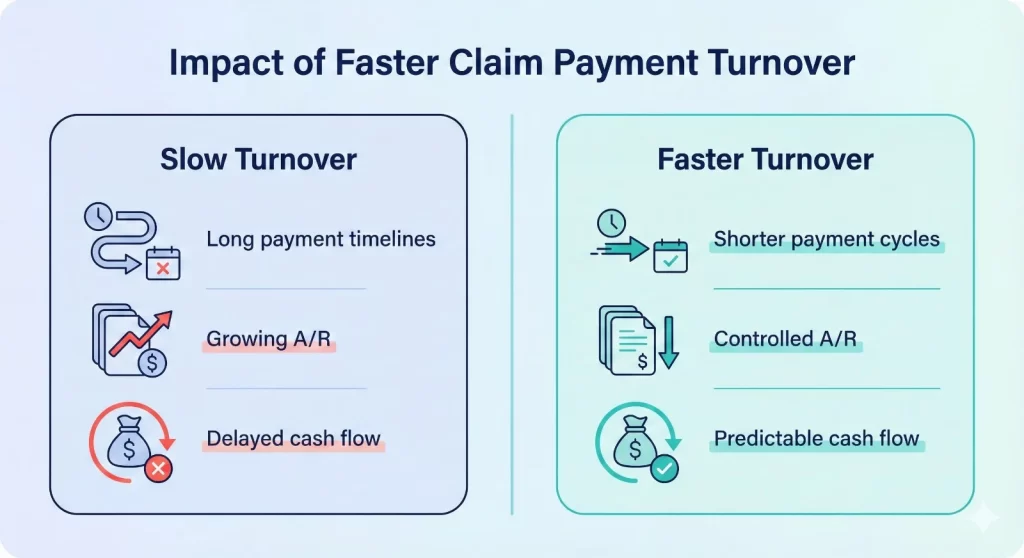
Example: Small California Practice (3 providers)
Before optimization:- Monthly charges: $120,000
- Average days in A/R: 78
- Monthly collections: ~$72,000
- Average days in A/R: 38
- Monthly collections: ~$96,000
Requirements for Faster Claim Payment Turnover
To consistently get paid on time, practices need:Operational Requirements
- Proper insurance credentialing (per provider & location)
- Active CAQH profiles
- Correct payer enrollment setup
- Electronic claims & ERAs enabled
Billing Requirements
- Clean claim rate above 95%
- Daily or weekly claim submission
- Structured denial workflows
- Timely appeals (within payer deadlines)
Management Requirements
- A/R tracking by payer and aging bucket
- Weekly follow-ups on unpaid claims
- Clear ownership of billing tasks
Common Challenges (And Honest Solutions)
“We’re billing in-house, but payments are slow”
In-house billing often lacks:- Time for follow-ups
- Up-to-date payer rules
- Capacity for appeals